
Overview - Surah 40: Ghafir (The Forgiver)
There are seven Surahs (al-Mu'min, HaMim al-Sajdah, al-Shura, al-Zukhruf, al-Dukhan, al-Jathiyah, al-Ahqaf) that begin with the word "HaMim". Thus these seven Surahs are also called "al-Hawamim". These are Surahs of Da'wah, inviting people to believe in Allah, take advantage of the mercy of Allah. There is solace and comfort in these Surahs for the Believers who were persecuted because of their faith and they are given the good news that the truth will prevail.
Sections:
- The Qur'an is from Allah who is both Merciful and Severe in Punishment. Warnings to the non-believers and comfort to the believers.
- The failure of the disbelievers. The Day of Judgment belongs to Allah.
- A lesson from the history of Prophet Moses -peace be upon him. Even the mighty Pharaoh and his army could not help him against the wrath of Allah.
- A Believer from the Pharaoh's people declared his faith. His conversation with his people.
- The false leaders will take their people to hell.
- Allah helps the Prophets and their followers.
- The Glory of Allah. Allah has power over life and death.
- The fate of the un-believers will be bad.
- Take lessons from the past history. After the judgment comes, repentance makes no difference.
The Surah has two common names. One is Ghafir [Forgiver] and the other is al-Mu'min [The Believer].
The following Surahs all have the letters, Ha-Meem as their opening Ayaat and interestingly what is common to all of them is their mentioning of the Prophet Musa. These Surahs are;
Surah 40: al-Ghafir
Surah 41: Fussilat
Surah 42: Shurah
Surah 43: Zukhruf
Surah 44: Dukhan
Surah 45: Jathiyah
Surah 46: al-Ahqaaf
There are 85 Ayat in this Surah.
Overview
| Total Ayat | 85 |
| Total Words * | 1219 |
| Root Words * | 265 |
| Unique Root Words * | 1 |
| Makki / Madani | Makki |
| Chronological Order* | 60th (according to Ibn Abbas) |
| Year of Revelation* | 9th year of Prophethood |
| Events during/before this Surah*
Boycott of Banu Hashim Yr 3, Boycott of Banu Hashim Yr 2, Boycott of Banu Hashim Yr 1, 2nd Migration to Abyssinia, Physical beating and torture of some Muslims - 1st Migration of Muslims to Abyssinia, Public Invitation to Islam - Persecution of Muslims; antagonism - ridicule - derision - accusation - abuse and false propaganda., Revelation begins - Private Invitation to Islam , Revelation begins - Private Invitation to Islam , Revelation begins - Private Invitation to Islam
| |
| Events during/after still to occur*
Death of Abu Talib - Death of Khadijah - Stoning at Ta'if - al-Isra wal Mi'raj - Night Journey,1st Pledge of Aqabah,2nd Pledge of Aqabah,,Migration from Makkah to Madinah - Building of Masjid Nabi in Madinah - Treaty with Jews of Madinah - Marriage of Prophet to Aishah,Change of Qiblah from Jerusalem to Makkah - Battle of Badr,Battle of Uhud,,Battle of Ahzab - Expedition of Banu Quraydhah,Treaty of Hudaiybiyah - Letters to Kings and Rulers,,Conquest of Makkah - Battle of Hunain,Hajj led by Abu Bakr - Expedition of Tabuk,Farewell Hajj by Prophet - Death of Prophet - End of Divine Revelation
| |
| Names of Prophets Mentioned
Nuh, Yusuf, Musa
| |
| Surah Index
Adversity (patience during) , God (ability to do anything) , God (wills no wrong to His creation) , Apostasy (repentance) (on Judgement Day is too late), Children, Children (in Heaven) , Children (of Israel) , Death, Disbelievers, Disbelievers (God’s promise to) , Earth, Earth (creation and recreation of) , Embryology, Food, Haman, Hell, Humankind (creation of) (from a drop of sperm), Humankind (creation of) (from dust), Humankind (insignificant compared to the Universe) , Joseph, Judgement, Judgement (Day) , Judgement (Day) (repentance then is too late), Knowledge (obligation upon man to obtain and impart) , Life (good things made lawful) , Livestock, Marriage (recline with spouses in Paradise) , Moses, Noah, Pharaoh, Prophet (miracles only by God’s leave) , Prophet (some not mentioned) , Qarun, Religion, Resurrection (Day) , Resurrection (of soul) , Revelation, Sexes (equality of) , Ships, Sin, Thamud, Weather (rain)
| |
Theme 1: The importance of Dawah [calling] to Allah.
- The beginning of Surat Ghafir contains: "The forgiver of sin, the acceptor of repentance, severe in punishment, owner of abundance. There is no deity except Him; to Him is the destination." (40:3). In its end, Allah mentions that when the disbelievers saw His punishment they said: "We believe in Allah." (40:84) This will occur in the hereafter, and thus this belief will be of no benefit because Allah presented to them everything that leads on to Iman and repentance in the worldly life. So when they were resolute on their disbelief, their end was to punishment and fire, with repentance and belief then being of no avail to them.
Manuscripts / Inscriptions

1st/2nd Century AH
1st/2nd Century AH
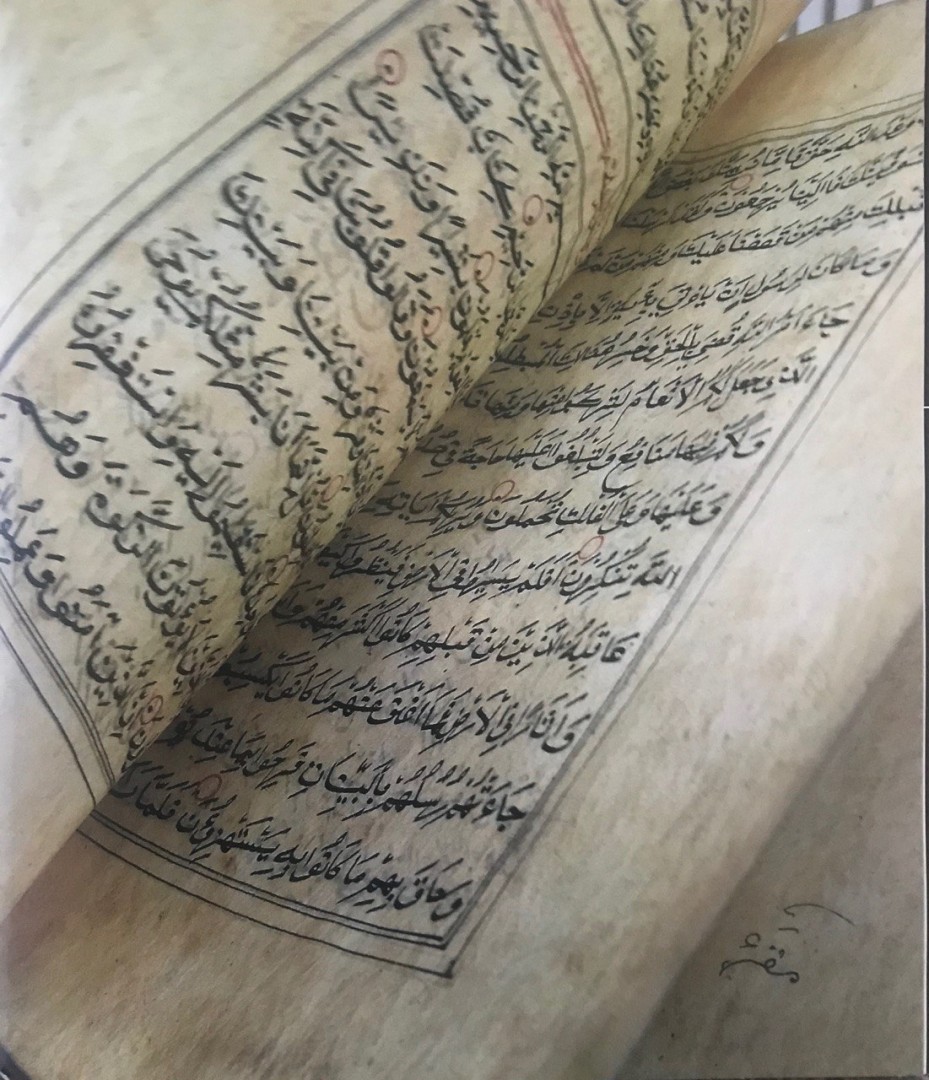
19th Century
19th Century

17th Century
17th Century
- Surah az-Zumar and Surah Ghafir both begin with the mention of making the Din purely for Him - مُخْلِصِينَ لَهُ الدِّينَ
-إِنَّا أَنزَلْنَا إِلَيْكَ الْكِتَابَ بِالْحَقِّ فَاعْبُدِ اللَّـهَ مُخْلِصًا لَّهُ الدِّينَ "Indeed, We have sent down to you the Book, [O Muhammad], in truth. So worship Allah, [being] sincere to Him in religion." (39:2)
فَادْعُوا اللَّـهَ مُخْلِصِينَ لَهُ الدِّينَ وَلَوْ كَرِهَ الْكَافِرُونَ "So invoke Allah, [being] sincere to Him in religion, although the disbelievers dislike it." (40:14) (40:65)
Total Word Count per Ayat (shows how many words per Ayat) = 1* | ||
| # | Root Word | Frequency in Surah | Frequency in Qur'an |
|---|---|---|---|
| 1. | أ ل ه | 57 | 2851 |
| 2. | ٱلَّذِى | 36 | 1464 |
| 3. | ك و ن | 25 | 1390 |
| 4. | ق و ل | 25 | 1722 |
| 5. | ر ب ب | 19 | 980 |
| 6. | د ع و | 18 | 212 |
| 7. | أ م ن | 17 | 879 |
| 8. | ي و م | 15 | 405 |
| 9. | إِلَّا | 13 | 663 |
| 10. | إِلَىٰ | 13 | 742 |
| Root Word | Frequency in Surah |
Frequency in Qur'an |
|---|---|---|
| أ ل ه | 57 | 2851 |
| ٱلَّذِى | 36 | 1464 |
| ك و ن | 25 | 1390 |
| ق و ل | 25 | 1722 |
| ر ب ب | 19 | 980 |
| د ع و | 18 | 212 |
| أ م ن | 17 | 879 |
| ي و م | 15 | 405 |
| إِلَّا | 13 | 663 |
| إِلَىٰ | 13 | 742 |
There are clear indications in the subject matter of this Surah to the conditions in which it was revealed. The disbelievers of Makkah at that time were engaged in two kinds of the activities against the Prophet. First, they were creating suspicion and misgiving in the minds of the people about the teaching of the Qur’an and the message of Islam and about the Prophet himself by starting many disputes and discussions, raising irrelevant objections and bringing ever new accusations so that the Prophet and the believers were sick of trying to answer them. Secondly, they were preparing the ground for putting an end to the Prophet himself. They were devising one plot after another, and on one occasion had even taken the practical steps to execute a plot. There is a hadith on the authority of Abdullah bin Amr bin al-As, saying that, one day when the Prophet was offering his prayers in the precincts of the Ka’bah, suddenly ‘Uqbah bin Abi Mu’ait, rushed forward and putting a piece of cloth round his neck started twisting it so as to strangle him to death. Abu Bakr, who happened to go there in time, pushed him away. Abdullah says that when Abu Bakr was struggling with the man, he was saying words to the effect: “Would you kill a man only because he says: God is my Lord?”
-
The following Surahs all have the letters, Ha-Meem as their opening Ayaat and interestingly what is common to all of them is their mentioning of the Prophet Musa. These Surahs are;
Surah 40: al-Ghafir
Surah 41: Fussilat
Surah 42: Shurah
Surah 43: Zukhruf
Surah 44: Dukhan
Surah 45: Jathiyah
Surah 46: al-Ahqaaf -
The angels who bear the throne of Allah pray for those humans who repent and follow the right way.
- A scene from the Day of Judgement.
- Allah knows the furtive looks and secret thoughts.
- Story of the Prophet Musa, Pharaoh, Haman and Qarun.
- An excellent speech of one of the relatives of Fir'on in favor of the Prophet Musa.
- Fir'on plotted against that relative, who was a believer, but Allah saved him and destroyed the people of Fir'on, and now they are presented before the fire of Hell every morning and evening.
- Allah says; "Call me, I will answer your prayers."
- No one has the right to be worshipped except Allah, the Creator and the Rabb of the world.
- Those who argue about the revelations of Allah will soon find out the Truth.
- Allah has sent many Rasools before Muhammad (pbuh): of them some are mentioned in the Qur'an and some are not.
- Belief after seeing the scourge of Allah is of no avail to the disbelievers.
Tafsir Zone
|
Sayyid Qutb Overview (Verses 69 - 77) A Singular Argument Against the backdrop of the emergence of human life, the cycle of life and death, the truth of initiation and origination, disputing the truth of God's revelations or the import of His signs sounds singular. Equally odd is any denial of God's messengers. Hence, a fearful warning is given in the form of a scene from the Day of Resurrection: Do you not see how those who dispute God's revelations are turned away from the truth? Those who reject the Book and the messages We sent through Our messengers. They will certainly come to know when, with chains and shackles round their necks, they will be dragged into scalding water, and then burnt in the fire of hell. Then they will be asked: 'Where now are those to whom you ascribed divinity side by side with God?' They will answer: 'They have forsaken us, or rather, what we used to invoke were nothing.' Thus does God let the unbelievers go astray. 'This is because on earth you took delight in things that are untrue and you were insolent. Enter now the gates of hell, where you shall abide. Evil indeed is the abode of the arrogant.' (Verses 69-76) These verses first wonder at those disputing God's revelations when they see the great signs He has placed in the universe. This serves as a prelude to outlining the fate that awaits them in the life to come. "Do you net see how those who dispute God's revelations are turned away from the truth? Those who reject the Book and the messages We sent through Our messengers." (Verses 69-70) They have rejected one book and one messenger, but, in fact, they reject everything all God's messengers said. Theirs is the same faith, put in its most perfect form in the final message. This means that they actually denied every single message and rejected every single messenger. Everyone who opposed the Divine faith, at any time in history including the present, did this when he or she opposed the truth advocated by the messenger addressing him personally. "They will certainly come to know." (Verse 70) This statement adds humiliation to painful punishment. "When, with chains and shackles round their necks, they will be dragged." (Verse 71) They are dragged like animals and beasts to add further humiliation to their predicament. Why should they be given honourable treatment when they have discarded every single cause of honour? Their humiliation and dragging eventually leads them "into scalding water, and then burnt in the fire of hell." (Verse 72) There they are tied up after the place is filled with a burning fire and scalding water. Such is the end they face. It is then that they are further rebuked and painfully embarrassed: "Then they will be asked: Where now are those to whom you ascribed divinity side by side with God?' (Verses 73-74) Their reply is that of someone who is in total sorrow after he realises that he has been badly deceived: "They will answer: They have forsaken us, or rather, what we used to invoke were nothing." (Verse 74) We have lost them and we have no way of finding them. Nor can they find us. In fact we did not ascribe divinity to anyone. These were all myths and false presumptions. After this sorrowful answer, the surah adds a general comment: "Thus does God let the unbelievers go astray." (Verse 74) A further and final reproach is then added: "This is because on earth you took delight in things that are untrue and you were insolent. Enter now the gates of hell, where you shall abide. Evil indeed is the abode of the arrogant." (Verses 75-76) God save us! What, then, was all that dragging, the chains, the scalding waters and fire? It appears that these were a prelude before entering hell where they would abide. It was because of their arrogance that they were so humiliated. Again, the stirah urges the Prophet to remain patient in the face of the many levelled adversity he was encountering, represented in the arrogance shown by the unbelievers and their persistent disputing of God's revelations. He is told to have complete trust in the fulfilment of God's promise, whether God keeps him alive to see with his own eyes some aspects of what He warned the unbelievers against or He gathers him to Himself first. The whole question is determined by God. God's messenger's task is to deliver his message. Ultimately, all will return to God: Hence, remain patient in adversity, for God's promise always comes true. Whether We show you something of what We hold in store for them or We cause you to die before that, it is to Us that they shall all return. (Verse 77) There is something that deserves careful attention here. The Prophet Muhammad, God's messenger, who faced a determined onslaught of rejection, persecution and arrogant hostility is being told in short: 'Fulfil your duty and do not be concerned with anything else. The outcome is none of your concern.' He was not even to entertain wishes that God might act in fulfilment of some aspects of the punishment promised to the arrogant unbelievers. He is simply required to fulfil his responsibility. The whole dispute is not his; it is God's and He determines how He will settle it. This is a very high standard of discipline which God requires from the advocates of His message, starting with His noble messenger, Muhammad (peace be upon him). What is required of them is very hard indeed. It requires them to keep their strong feelings and wishes in check. Is it for this reason that the command to remain patient is given at this point in the surah? In this sense, it is not a repeat of the earlier order to be patient. Rather, it points to a different type of patience, which can be harder than handling arrogance and physical harm with patience. Here we see that ordinary human beings, advocating God's message, are required to purge themselves of the desire to see how God punishes His and their enemies who continue to fight against them. This is extremely difficult. Yet it is part of the cultivation of the ideals of those who serve God's cause. They are to shed everything that they desire for themselves, even though this may be no more than to see the enemies of their faith defeated and punished. When the advocates of God's faith attain this level, they equip themselves with what saves them from drowning in the ocean of desire. Desires may seem pure and justified to start with, but Satan tries hard to manipulate them for his own ends. |
Ibn Kathir (English)
Sayyid Qutb
Sha'rawi
Al Jalalain
Mawdudi
الطبري - جامع البيان
ابن كثير - تفسير القرآن العظيم
القرطبي - الجامع لأحكام
البغوي - معالم التنزيل
ابن أبي حاتم الرازي - تفسير القرآن
ابن عاشور - التحرير والتنوير
ابن القيم - تفسير ابن قيّم
السيوطي - الدر المنثور
الشنقيطي - أضواء البيان
ابن الجوزي - زاد المسير
الآلوسي - روح المعاني
ابن عطية - المحرر الوجيز
الرازي - مفاتيح الغيب
أبو السعود - إرشاد العقل السليم
الزمخشري - الكشاف
البقاعي - نظم الدرر
الهداية إلى بلوغ النهاية — مكي ابن أبي طالب
القاسمي - محاسن التأويل
الماوردي - النكت والعيون
السعدي - تيسير الكريم الرحمن
عبد الرحمن الثعالبي - الجواهر الحسان
السمرقندي - بحر العلوم
أبو إسحاق الثعلبي - الكشف والبيان
الشوكاني - فتح القدير
النيسابوري - التفسير البسيط
أبو حيان - البحر المحيط
البيضاوي - أنوار التنزيل
النسفي - مدارك التنزيل
ابن جُزَيّ - التسهيل لعلوم التنزيل
علي الواحدي النيسابوري - الوجيز
السيوطي - تفسير الجلالين
المختصر في التفسير — مركز تفسير
|
|
|
- Surah 40. Ghafir - Saad al Ghamidi https://www.youtube.com/watch?v=q5Onjs1b4g8&list=PLhM2xiAUdw2cAqW_o3zZkbhJNw0bnaBZN&index=40
- Surah 40. Ghafir Mahmoud Khalil Al Hussary https://www.youtube.com/watch?v=VDvrxnUX38g&index=40&list=PLxpAkjlGauHfMFWX22VZWOKpzjr-vH_BM
- Surah 40. Ghafir Muhammad Al Luhaydan https://www.youtube.com/watch?v=9ZxSQZ-JvZA&index=40&list=PLxpAkjlGauHfKAYuQLRNAZomoezhfhRZe
- Idris Akbar Surah Ghafir https://www.youtube.com/watch?v=IY1b_q4bofQ
- Surah 40.Ghafir muhammad Minshawi https://www.youtube.com/watch?v=zPMGO7guV1c&list=PLxpAkjlGauHdUcO_uc-8F8J2NUQRDZjPG&index=40
- Dr Israr Ahmed Tafsir Surah Al-M'umin (47) to Surah Al-Shura (1-13)1 https://www.youtube.com/watch?v=pv80yaqL00A&list=PLB4B8D1654A8BD263&index=89
- Surah Al-M'umin (47) to Surah Al-Shura (1-13)2 https://www.youtube.com/watch?v=i8EU2FqF2tk&list=PLB4B8D1654A8BD263&index=90


