
Overview - Surah 91: ash-Shams (The Sun )
The Surah tells us that as there is a contrast between sun and moon, night and day, heaven and earth, so there is also a big difference between good and evil. The Surah takes its name from the first Ayat, وَالشَّمْسِ وَضُحَاهَا "By the sun and its brightness" [91:1].
There are 15 Ayat in this Surah.
Overview
| Total Ayat | 15 |
| Total Words * | 54 |
| Root Words * | 39 |
| Unique Root Words * | 4 |
| Makki / Madani | Makki |
| Chronological Order* | 26th (according to Ibn Abbas) |
| Year of Revelation* | 5th year of Prophethood |
| Events during/before this Surah*
Physical beating and torture of some Muslims - 1st Migration of Muslims to Abyssinia, Public Invitation to Islam - Persecution of Muslims; antagonism - ridicule - derision - accusation - abuse and false propaganda., Revelation begins - Private Invitation to Islam , Revelation begins - Private Invitation to Islam , Revelation begins - Private Invitation to Islam
| |
| Events during/after still to occur*
2nd Migration to Abyssinia,Boycott of Banu Hashim Yr 1,Boycott of Banu Hashim Yr 2,Boycott of Banu Hashim Yr 3,Death of Abu Talib - Death of Khadijah - Stoning at Ta'if - al-Isra wal Mi'raj - Night Journey,1st Pledge of Aqabah,2nd Pledge of Aqabah,,Migration from Makkah to Madinah - Building of Masjid Nabi in Madinah - Treaty with Jews of Madinah - Marriage of Prophet to Aishah,Change of Qiblah from Jerusalem to Makkah - Battle of Badr,Battle of Uhud,,Battle of Ahzab - Expedition of Banu Quraydhah,Treaty of Hudaiybiyah - Letters to Kings and Rulers,,Conquest of Makkah - Battle of Hunain,Hajj led by Abu Bakr - Expedition of Tabuk,Farewell Hajj by Prophet - Death of Prophet - End of Divine Revelation
| |
| Names of Prophets Mentioned
No Prophets names are mentioned in this Surah
| |
| Surah Index
Astronomy (celestial mechanics) (moon), Astronomy (celestial mechanics) (sun), Earth, Humankind, Resurrection (of soul) , Salih, Thamud, Thamud (she camel) , Thamud (she camel) (killing of), Thamud (she camel) (punishment for)
| |
Its theme is to distinguish the good from the evil and to warn the people who were refusing to understand this distinction of an evil ending that awaited them. In view of the subject matter this Surah consists of two parts. The first part consists of v. 1-10, and the second of v. 11-15. The first part deals with three things:
1. That just as the sun and the moon, the day and the night, the earth and the sky, are different from each other and contradictory in their effects and results, so are the good and the evil different from each other and contradictory in their effects and results; they are neither alike in their outward appearance nor can they be alike in their results.
2. That God after giving the human self powers of the body, sense and mind has not left it uninformed in the world, but has instilled into his unconscious by means of a natural inspiration the distinction between good and evil, right and wrong, and the sense of the good to be good and of the evil to be evil.
3. That the future of man depends on how by using the powers of discrimination, will and judgment that God has endowed him with, he develops the good and suppresses the evil tendencies of the self. If he develops the good inclination and frees his self of the evil inclinations, he will attain to eternal success and if, on the contrary, he suppresses the good and promotes the evil, he will meet with disappointment and failure.
In the second part, citing the historical precedent of the people of Thamud, the significance of Apostleship has been brought out. A Messenger is raised in the world because the inspirational knowledge of good and evil that God has placed in human nature is, by itself, not enough for the guidance of man. On account of mans failure to fully comprehend he proposes false ideas and theories of good and evil and thus goes astray. That is why God sent down clear Revelation to the Prophets so that they would make clear to the people as to what is good and what is evil. Likewise, the Prophet Salih was sent to the people of Thamud, but the people overwhelmed by the evil of their self, had become so rebellious that they rejected him. And when he presented before them the miracle of the she camel, as demanded by themselves, the most wretched one of them, in spite of his warning, hamstrung it, in accordance with the will and desire of the people. Consequently, the entire tribe was overtaken by a disaster. While narrating this story of the Thamud nowhere in the Surah has it been said - O people of Quraysh, if you rejected your Prophet, Muhammad, as the Thamud had rejected theirs, you too would meet with the same fate as they met. The conditions at that time in Makkah were similar to those of the people of Thamud against the Prophet Salih. Therefore, the narration of this story was by itself enough to suggest to the people of Makkah that this historical precedent applied to them too.
Manuscripts / Inscriptions

5th Century AH
5th Century AH
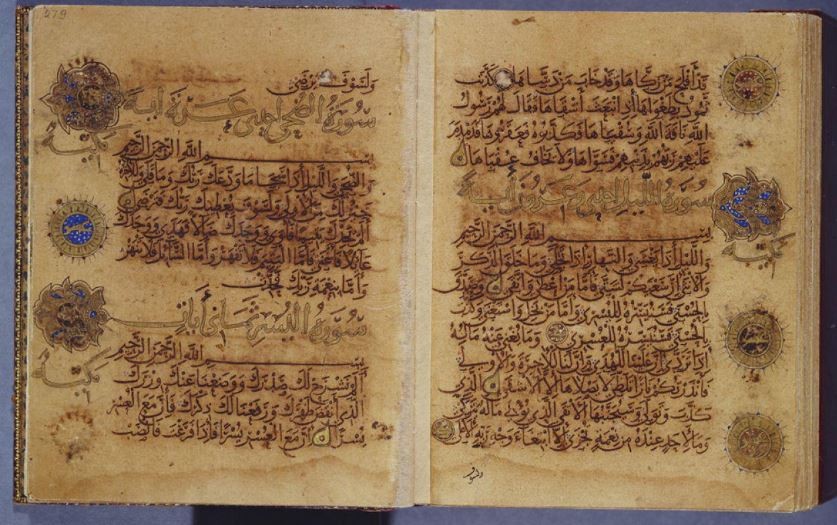
391 H (1001 CE)
391 H (1001 CE)

1st Century Hijrah (7th Century CE)
1st Century Hijrah (7th Century CE)
- أَنَّهُ قَالَ صَلَّى مُعَاذُ بْنُ جَبَلٍ الأَنْصَارِيُّ لأَصْحَابِهِ الْعِشَاءَ فَطَوَّلَ عَلَيْهِمْ فَانْصَرَفَ رَجُلٌ مِنَّا فَصَلَّى فَأُخْبِرَ مُعَاذٌ عَنْهُ فَقَالَ إِنَّهُ مُنَافِقٌ . فَلَمَّا بَلَغَ ذَلِكَ الرَّجُلَ دَخَلَ عَلَى رَسُولِ اللَّهِ صلى الله عليه وسلم فَأَخْبَرَهُ مَا قَالَ مُعَاذٌ فَقَالَ لَهُ النَّبِيُّ صلى الله عليه وسلم " أَتُرِيدُ أَنْ تَكُونَ فَتَّانًا يَا مُعَاذُ إِذَا أَمَمْتَ النَّاسَ فَاقْرَأْ بِالشَّمْسِ وَضُحَاهَا . وَسَبِّحِ اسْمَ رَبِّكَ الأَعْلَى . وَاقْرَأْ بِاسْمِ رَبِّكَ . وَاللَّيْلِ إِذَا يَغْشَى
'Mu'adh b. Jabal al-Ansari led his companions in the night prayer and prolonged it for them. A person amongst us said prayer (after having separated himself from the congregation). Mu'adh was informed of this, and he remarked that he was a hypocrite. When it (the remark) was conveyed to the man, he went to the Messenger of Allah (ﷺ) and informed him of what Mu'adh had said. Upon this the Messenger of Allah (ﷺ) said to him: Mu'adh, do you want to become a person putting (people) to trial? When you lead people in prayer, recite:" By the Sun and its morning brightness" (Surat ash-Shams)," Glorify the name of thy most high Lord" (Surat al-A`la) and" Read in the name of Lord" (Surat al-`Alaq), and" By the night when it spreads" (Surat al-Lail). ٍ Sahih Muslim
Total Word Count per Ayat (shows how many words per Ayat) = 4* | ||
| # | Root Word | Frequency in Surah | Frequency in Qur'an |
|---|---|---|---|
| 1. | إِذَا | 3 | 409 |
| 2. | س و ي | 2 | 83 |
| 3. | ك ذ ب | 2 | 282 |
| 4. | أ ل ه | 2 | 2851 |
| 5. | ش م س | 1 | 33 |
| 6. | ض ح و | 1 | 7 |
| 7. | ق م ر | 1 | 27 |
| 8. | ت ل و | 1 | 63 |
| 9. | ن ه ر | 1 | 113 |
| 10. | ج ل و | 1 | 5 |
| Root Word | Frequency in Surah |
Frequency in Qur'an |
|---|---|---|
| إِذَا | 3 | 409 |
| س و ي | 2 | 83 |
| ك ذ ب | 2 | 282 |
| أ ل ه | 2 | 2851 |
| ش م س | 1 | 33 |
| ض ح و | 1 | 7 |
| ق م ر | 1 | 27 |
| ت ل و | 1 | 63 |
| ن ه ر | 1 | 113 |
| ج ل و | 1 | 5 |
The subject matter and the style show that this Surah was revealed in the earliest period at Makkah at a stage when opposition to the Prophet had grown very strong and intense.
- أَنَّهُ قَالَ صَلَّى مُعَاذُ بْنُ جَبَلٍ الأَنْصَارِيُّ لأَصْحَابِهِ الْعِشَاءَ فَطَوَّلَ عَلَيْهِمْ فَانْصَرَفَ رَجُلٌ مِنَّا فَصَلَّى فَأُخْبِرَ مُعَاذٌ عَنْهُ فَقَالَ إِنَّهُ مُنَافِقٌ . فَلَمَّا بَلَغَ ذَلِكَ الرَّجُلَ دَخَلَ عَلَى رَسُولِ اللَّهِ صلى الله عليه وسلم فَأَخْبَرَهُ مَا قَالَ مُعَاذٌ فَقَالَ لَهُ النَّبِيُّ صلى الله عليه وسلم " أَتُرِيدُ أَنْ تَكُونَ فَتَّانًا يَا مُعَاذُ إِذَا أَمَمْتَ النَّاسَ فَاقْرَأْ بِالشَّمْسِ وَضُحَاهَا . وَسَبِّحِ اسْمَ رَبِّكَ الأَعْلَى . وَاقْرَأْ بِاسْمِ رَبِّكَ . وَاللَّيْلِ إِذَا يَغْشَى
'Mu'adh b. Jabal al-Ansari led his companions in the night prayer and prolonged it for them. A person amongst us said prayer (after having separated himself from the congregation). Mu'adh was informed of this, and he remarked that he was a hypocrite. When it (the remark) was conveyed to the man, he went to the Messenger of Allah (ﷺ) and informed him of what Mu'adh had said. Upon this the Messenger of Allah (ﷺ) said to him: Mu'adh, do you want to become a person putting (people) to trial? When you lead people in prayer, recite:" By the Sun and its morning brightness" (Surat ash-Shams)," Glorify the name of thy most high Lord" (Surat al-A`la) and" Read in the name of Lord" (Surat al-`Alaq), and" By the night when it spreads" (Surat al-Lail). ٍ Sahih Muslim
Success depends on keeping the soul pure and failure depends on corrupting it. The people of Thamud were leveled to the ground for that very reason.
Tafsir Zone
|
Sayyid Qutb Overview (Verses 11 - 15) Historical Example The surah then gives an example of the failure which befalls those who corrupt themselves, and erect a barrier between themselves and divine guidance: “In their overweening arrogance the people of Thamud denied the truth, when their most hapless wretch broke forth. God’s Messenger said to them: ‘It is a she-camel belonging to God, so let her have her drink.’ But they rejected him, and cruelly slaughtered her. For this their sin their Lord let loose His scourge upon them, and razed their city to the ground. He does not fear what may follow.” (Verses 11-15) The story of the Thamud and their messenger, Salih, is mentioned several times in the Qur’an. A discussion of it is given every time it occurs. The reader may refer for further details to the commentary on Surah 89, The Dawn, in this volume. The present surah, however, states that the people of Thamud rejected their prophet and accused him of lying simply because they were arrogant and insolent. Their transgression is represented here by the most hapless wretch among them rushing to slaughter the she-camel. He is the most wretched as a result of his crime. Their messenger had warned them in advance, saying, “It is a she-camel belonging to God, so let her have her drink.” This was his condition when they asked him for a sign. The sign was that the she-camel had the water for herself one day and left it for the rest of the cattle the next day. The she-camel must have had something else peculiar to her, but we shall not go into detail because God has not told us about it. The Thamud, however, did not heed their messenger’s warnings but killed the she-camel. The person who perpetrated the crime, the arch sinner, is the most- wretched, but they were all held responsible because they did not take him to task. On the contrary, they applauded what he did. A basic principle of Islam is that society bears a collective responsibility in this life. This does not conflict with the principle of individual responsibility in the hereafter when everyone is answerable for his own deeds. It is a sin, however, not to counsel and urge one another to adhere to what is good and not to punish evil and transgression. As a result of the Thamud’s arrogance and their outrageous crime, a calamity befell them: “For this their sin their Lord let loose His scourge upon them, and razed their city to the ground.” (Verse 14) The Arabic verse uses the verb damdama for ‘let loose His scourge’, which creates, by its repetitiveness, an added feeling of horror, as we learn that the city was completely razed to the ground. “He does not fear what may follow.” (Verse 15) All praises and glorification be to Him. Whom, what and why should He fear? The meaning aimed at here is what the statement entails: he who does not fear the consequences punishes most severely. This is true of God’s punishment. In conclusion, we say the surah provides a link between the human soul, the basic facts of the universe, its constant and repetitive scenes and God’s unfailing law of punishing tyrant transgressors. This He does according to His own wise planning which sets a time for everything and a purpose for every action. He is the Lord of man, the universe and fate. |
Ibn Kathir (English)
Sayyid Qutb
Sha'rawi
Al Jalalain
Mawdudi
الطبري - جامع البيان
ابن كثير - تفسير القرآن العظيم
القرطبي - الجامع لأحكام
البغوي - معالم التنزيل
ابن أبي حاتم الرازي - تفسير القرآن
ابن عاشور - التحرير والتنوير
ابن القيم - تفسير ابن قيّم
السيوطي - الدر المنثور
الشنقيطي - أضواء البيان
ابن الجوزي - زاد المسير
الآلوسي - روح المعاني
ابن عطية - المحرر الوجيز
الرازي - مفاتيح الغيب
أبو السعود - إرشاد العقل السليم
الزمخشري - الكشاف
البقاعي - نظم الدرر
الهداية إلى بلوغ النهاية — مكي ابن أبي طالب
القاسمي - محاسن التأويل
الماوردي - النكت والعيون
السعدي - تيسير الكريم الرحمن
عبد الرحمن الثعالبي - الجواهر الحسان
السمرقندي - بحر العلوم
أبو إسحاق الثعلبي - الكشف والبيان
الشوكاني - فتح القدير
النيسابوري - التفسير البسيط
أبو حيان - البحر المحيط
البيضاوي - أنوار التنزيل
النسفي - مدارك التنزيل
ابن جُزَيّ - التسهيل لعلوم التنزيل
علي الواحدي النيسابوري - الوجيز
السيوطي - تفسير الجلالين
المختصر في التفسير — مركز تفسير
|
|
|
The Sun is a star found at the center of the Solar System. Around 74% of the Sun’s mass is made up of hydrogen. Helium makes up around 24% while heavier elements such as oxygen, carbon, iron and neon make up the remaining percentage. The Sun generates huge amounts of energy by combining hydrogen nuclei into helium. This process is called nuclear fusion. The Sun is around 93,000,000 miles from the Earth and it's light takes approximately 8 minutes to reach the Earth travelling at a speed of 299,792,458 metres per second (speed of light).
- Surah 91. Ash-Shams - Saad al Ghamidi https://www.youtube.com/watch?v=vva2s78xuw4&list=PLhM2xiAUdw2cAqW_o3zZkbhJNw0bnaBZN&index=91
- Surah 91. Ash-Shams Mahmoud Khalil Al Hussary https://www.youtube.com/watch?v=K6CL80Z_C-Q&list=PLxpAkjlGauHfMFWX22VZWOKpzjr-vH_BM&index=91
- Surah 91. Ash-Shams Muhammad Al Luhaydan https://www.youtube.com/watch?v=uOfvI9_-9C8&index=91&list=PLxpAkjlGauHfKAYuQLRNAZomoezhfhRZe
- Surah 91. Ash-Shams Idris Akbar https://www.youtube.com/watch?v=DZSN73vPNes
- Surah 91. Ash-Shams Muhammad Minshawi https://www.youtube.com/watch?v=Dhd7mXncbVw&list=PLxpAkjlGauHdUcO_uc-8F8J2NUQRDZjPG&index=91
- Dr Israr Ahmed Tafsir Surah Al Shams 11 to Surah Al Aidayat1 https://www.youtube.com/watch?v=MEPGFbtAsS4&list=PLB4B8D1654A8BD263&index=111https://www.youtube.com/watch?v=MEPGFbtAsS4&list=PLB4B8D1654A8BD263&index=111
- Surah Al Shams 11 to Surah Al Aidayat2 https://www.youtube.com/watch?v=FCBekEiA5Mc&index=112&list=PLB4B8D1654A8BD263


